
Our Cleaning
Process
From the first site assessment through to the ongoing documentation trail, every step of our process is designed to meet the compliance requirements of the facility we are cleaning — not a generic process adapted from general commercial cleaning. Here is exactly what to expect when you engage Golden Star Medical Cleaning.
The Eight Steps of Our Process — From First Contact to Ongoing Programme
You call, email, or submit a quote request. We gather the basics — facility type, approximate size, number of clinical rooms, your accreditation framework, and whether you have a specific compliance deadline. For most facilities, this initial conversation takes 10–15 minutes. For hospitals or aged care facilities, we may schedule a scoping call with your facilities manager or director of nursing before the site assessment.
A senior team member visits the facility — typically within 5 business days of initial contact, sooner for facilities with urgent compliance needs. The assessment walks every zone: clinical rooms, waiting and reception, bathrooms, sterilisation bay (dental/GP), corridors, staff areas. We confirm the zone inventory, identify any specialist requirements (isolation rooms, theatre access, amalgam-safe product needs), check current documentation, and note access and scheduling constraints.
A written quote is issued within 24–48 hours of the site assessment. It is zone-by-zone — you can see exactly what each component of the programme costs, not a single blended rate. For facilities in our Recommended or Accreditation Ready tier, the quote also shows the cost of the quarterly deep clean programme and any event-based costs (theatre turnaround, isolation discharge, outbreak response visits) as separate line items, so the total cost is transparent at every utilisation level.
Once the programme is confirmed, we brief the assigned cleaning team on the facility — zone map, access protocol, cleaning sequence, product selection for each zone, PPE requirements, and any facility-specific requirements (dementia wing protocols in aged care, amalgam-safe product confirmation in dental, after-hours security procedure). The briefing is documented. WWVP clearances for all staff are confirmed before the first visit to any aged care facility.
The first visit is treated as a baseline inspection clean. Where a previous cleaning provider has been in place, the first clean addresses any accumulation zone buildup not covered by the routine programme — above sightline, behind and beneath equipment, floor junctions. Any findings are photographed and noted. The senior team member who conducted the site assessment attends or reviews the first visit report to confirm the scope has been executed correctly before handing over to the regular team.
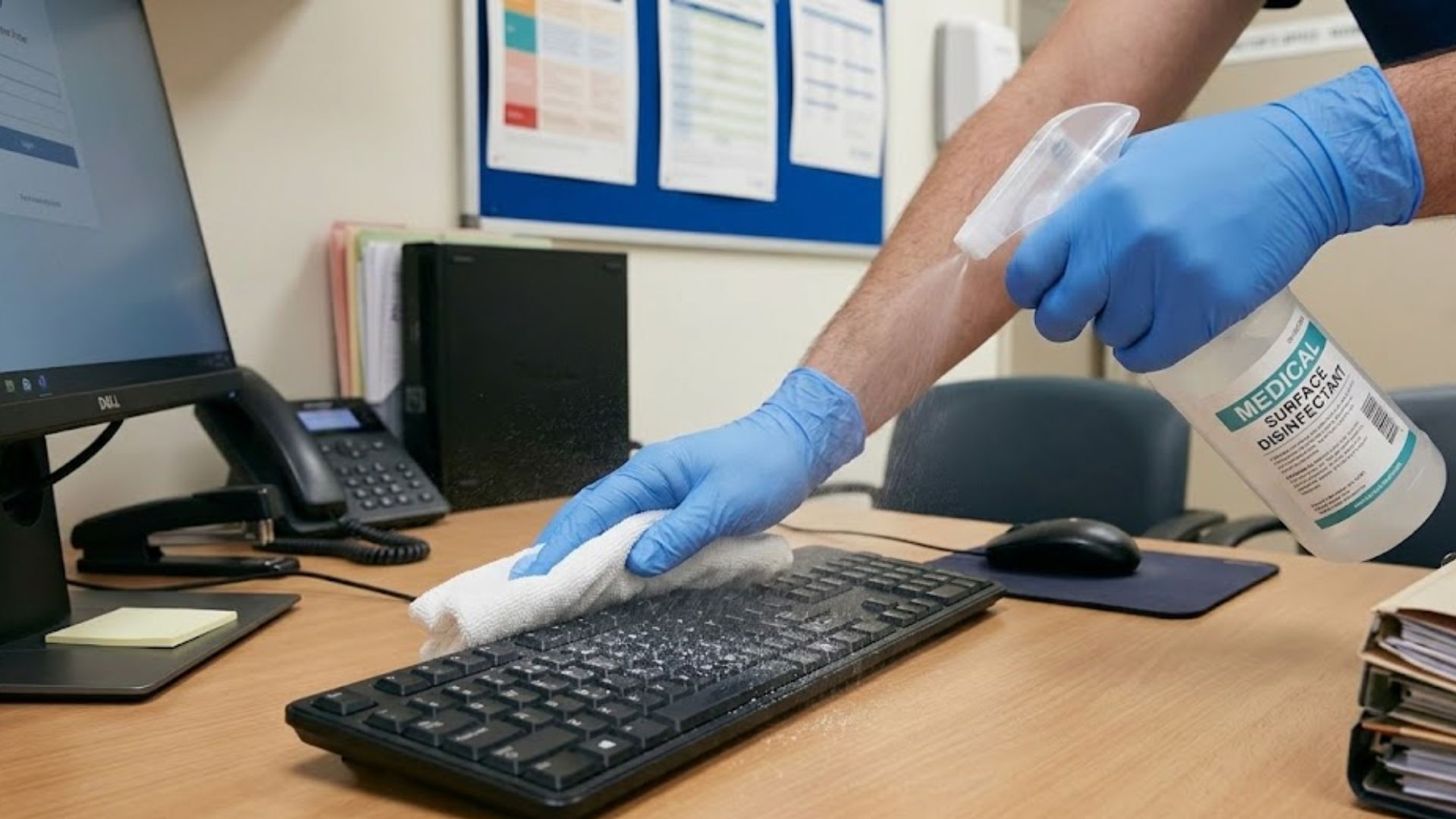
Every routine visit follows the documented cleaning sequence for the facility — zone by zone, product by product, with dwell times confirmed. A signed completion record is left at the facility after every visit: date, time, areas cleaned, products used, staff member. This record is your documentation trail for NSQHS Standard 3, ACQSC Quality Standards, or RACGP infection control policy purposes.
Every quarter, a scheduled deep clean event addresses the four accumulation zones not reached by routine cleaning: above sightline, behind and beneath fixed equipment, floor junctions and skirting, window tracks and soft furnishings. A signed deep clean report is issued after each event — naming zones covered, products used, and any findings or corrective actions taken. This report is a direct input into your NSQHS or ACQSC evidence file.
For facilities on our Recommended or Accreditation Ready programme, a pre-agreed outbreak response arrangement is in place before any event occurs. When a suspected outbreak is notified, the three-phase protocol activates immediately — no new scope negotiation, no delay. Phase 1 (suspected): enhanced frequency and chemistry. Phase 2 (confirmed): pathogen-matched TGA virucidal or sporicidal, increased PPE, outbreak cleaning log opened. Phase 3 (clearance): post-outbreak terminal clean, log closed and signed, programme returned to routine.
Healthcare Cleaning vs General Commercial Cleaning — What Changes at Each Step
Each row shows what a general commercial cleaning process does versus what our healthcare process requires at the same step.
What You Can Expect from Every Visit
These are not aspirational commitments — they are operational standards applied to every healthcare facility we service, regardless of size or programme tier.
What Happens When You Contact Us
The first step is a phone call or online enquiry — no obligation, no sales pressure. We ask about your facility type, size, and your most pressing compliance need. If you are approaching an NSQHS survey, an ACQSC assessment, or a RACGP accreditation visit, we prioritise the site assessment and can usually attend within 2–3 business days.
The site assessment itself is free. It takes 20–60 minutes depending on facility size. You do not need to prepare anything — we walk the facility, ask questions, and produce the quote. The written quote arrives within 24–48 hours of the assessment and shows the full programme cost broken down by zone, so you can see exactly what you are paying for.
If you have an existing cleaning provider and are considering switching, the site assessment also covers a documentation gap review — we confirm what your current programme is and is not producing against your accreditation framework, and show you what changes if you move to our programme. You can make an informed decision before any commitment is made.
Free, no obligation — typically 20–60 minutes on-site.
See How Our Process Works for Your Melbourne Facility
Site assessment takes 20–60 minutes. Written zone-by-zone quote within 48 hours. TGA-registered chemistry, two-step protocol, signed completion record every visit. Outbreak response arrangement available. See our compliance standards or explore our services. Call 0484 042 336 to start.