
Outbreak Response Cleaning
When a confirmed or suspected infectious outbreak occurs in a healthcare or aged care facility, routine cleaning protocols are no longer sufficient. An outbreak demands enhanced frequency, expanded scope, upgraded chemistry, and a structured response plan that is aligned to the specific pathogen — not a generic enhanced clean. The difference between containing an outbreak and allowing it to spread in a facility is often determined by the speed, chemistry and thoroughness of the environmental cleaning response in the first 24–48 hours.
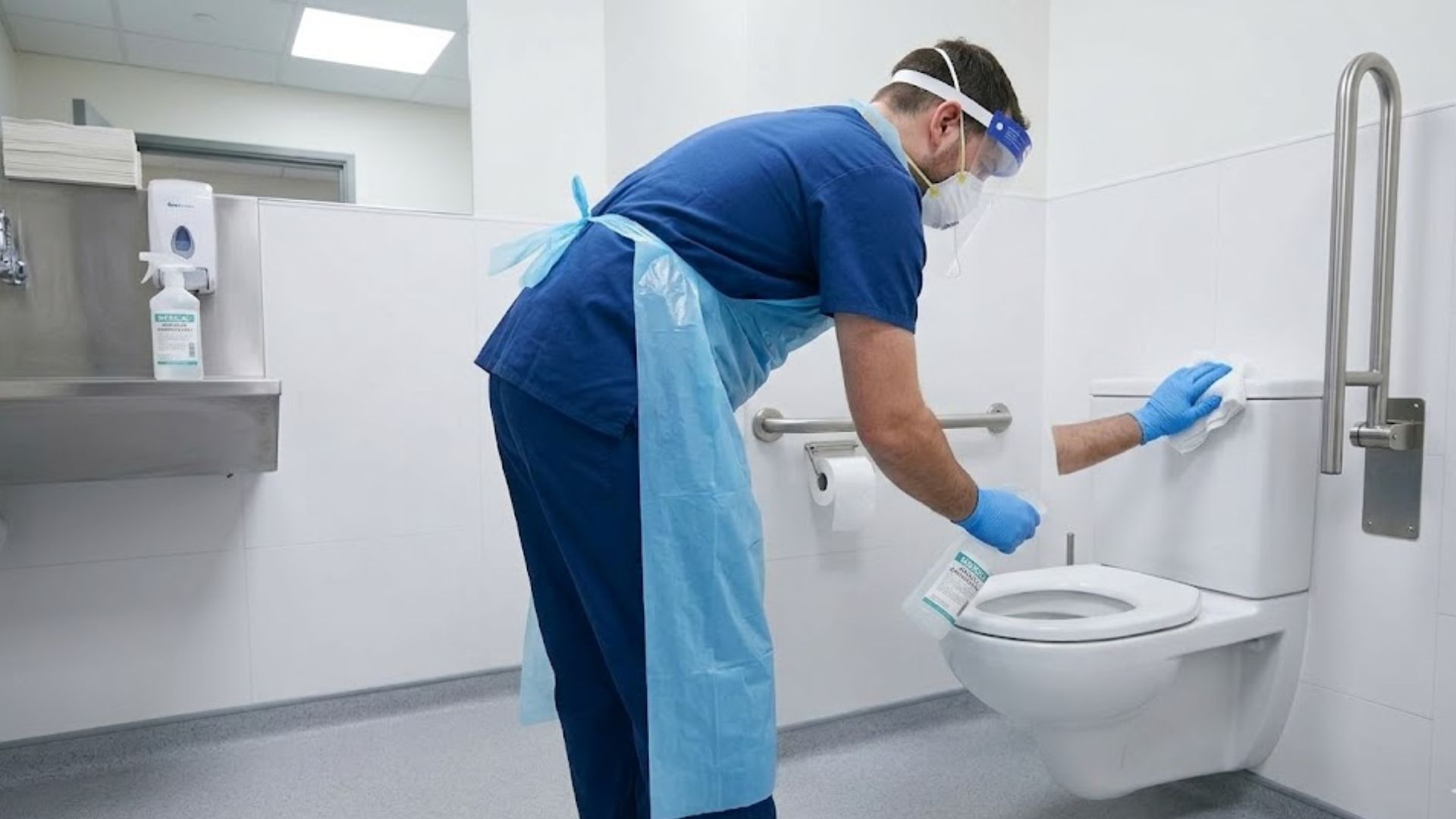
Outbreak Response Is Not an Enhanced Routine Clean
An infectious outbreak in a healthcare or aged care facility requires a fundamentally different cleaning response from the routine daily programme. Three things change: the chemistry (pathogen-matched virucidal or sporicidal disinfectants at confirmed kill-claim concentrations, not standard QAC), the frequency (enhanced cleaning intervals — typically 2–4 times daily for high-touch surfaces and affected rooms during active outbreak), and the scope (expanded beyond the standard room checklist to include all surfaces that the implicated transmission route can reach).
The transmission route of the implicated pathogen determines the scope expansion. A gastroenteritis or norovirus outbreak — transmitted by the faecal-oral route via contaminated environmental surfaces — requires enhanced cleaning of all surfaces that hands touch: door handles, tap handles, call buttons, remote controls, light switches, shared equipment, bathroom fixtures, and any shared food preparation or servicing area. A respiratory outbreak — COVID-19, influenza — requires enhanced cleaning of all surfaces at respiratory droplet height, plus any shared air-handling environment. A contact-transmission outbreak — MRSA, VRE, scabies — requires enhanced cleaning of patient-contact surfaces with a disinfectant active against the specific organism at confirmed contact time.
The chemistry mismatch is the most common outbreak cleaning failure. Standard QAC disinfectants are not active against norovirus, C. diff spores or many enveloped respiratory viruses at normal use concentrations. Using a QAC product as the sole disinfectant during a norovirus outbreak — the most frequent outbreak type in aged care and hospital settings — provides no virucidal benefit for that organism and does not arrest environmental transmission. Product selection must be matched to the pathogen, not defaulted to the facility's standard product. See our services overview or request a quote.
Pathogens — Chemistry & Scope by Outbreak Type
Before, During & After an Outbreak — Three Distinct Cleaning Phases
An outbreak response is not a single cleaning event — it is a three-phase programme. Treating it as a single enhanced clean, or only activating the enhanced response after the outbreak is confirmed, misses the critical early-containment window and the post-outbreak clearance phase that determines whether the outbreak recurs. Each phase has a distinct objective, a distinct scope and distinct chemistry requirements.
How We Respond to an Outbreak Notification
When an outbreak notification is received, our first action is to establish the pathogen and transmission category. The outbreak response protocol we deploy is determined by the organism — not by the general category of "outbreak". Norovirus requires a different chemistry profile from MRSA, which requires a different scope from COVID-19. Deploying a standard enhanced clean without pathogen-matched chemistry is the equivalent of applying a general antibiotic to an unidentified infection and expecting it to work.
We work directly with the facility's infection prevention lead or director of nursing to confirm the outbreak classification, the affected areas, the transmission-based precaution category in effect, and the reporting obligations to the Department of Health Victoria. Our outbreak cleaning record is maintained in the format that satisfies the Victorian Department of Health outbreak reporting requirements — documenting the cleaning actions taken as part of the facility's overall outbreak management response.
For aged care facilities, outbreak management is a specific ACQSC regulatory requirement under the Aged Care Quality Standards. An ACQSC assessment following an outbreak will examine the facility's outbreak management records including cleaning documentation. Our three-phase cleaning record — covering the suspected phase, the active outbreak phase and the post-outbreak clearance — provides the documentary evidence the ACQSC assessor needs to see that the environmental cleaning response was appropriate to the outbreak type and was maintained throughout the event.
The post-outbreak clearance clean is not optional and not merely administrative. Norovirus remains viable on environmental surfaces for up to 28 days. C. diff spores survive for months. A facility that declares an outbreak over based on clinical case resolution without a thorough environmental clearance clean is at elevated risk of recurrence from residual surface contamination — particularly in bathrooms, food service areas and shared equipment that was exposed during the active phase.
Outbreak Notification to Clearance
Facility contacts us with outbreak notification. Pathogen and transmission category confirmed with infection prevention lead. Affected area mapped. Phase 1 protocol activated immediately — enhanced frequency and chemistry upgrade do not wait for lab confirmation.
High-touch surface frequency increased to 2–4× daily. Chemistry upgraded to pathogen-matched TGA virucidal or sporicidal. Bathroom frequency increased — post-symptomatic-use clean added. Affected zone clearly identified. Cleaning records commenced.
Full outbreak protocol: pathogen-confirmed chemistry, expanded scope, enhanced PPE, terminal clean at every discharge. Shared equipment disinfected between patients. Dining areas in scope. Daily records with product, concentration, dwell time and staff name.
48 hours after last symptomatic case: full facility deep disinfection of affected area. Terminal clean of all rooms to outbreak protocol standard. ATP testing of high-touch surfaces (optional but recommended for accreditation evidence). Return to routine programme confirmed.
Full three-phase cleaning record compiled — Phase 1 through clearance. Issued as signed PDF for ACQSC, NSQHS and Department of Health Victoria reporting. Post-outbreak review with facility manager: any gaps in the environmental cleaning programme identified and addressed before close of engagement.
Certain outbreak types in Victorian healthcare and aged care facilities — including gastroenteritis outbreaks of 3 or more residents in an aged care setting, and COVID-19 outbreaks — trigger mandatory reporting obligations to the Department of Health Victoria. Our cleaning records are maintained in a format that supports the facility's outbreak reporting submission. We do not manage the reporting itself — that is the responsibility of the facility's infection prevention lead or director of nursing — but our documentation is structured to provide the environmental cleaning evidence required in that submission.
Standards Governing Outbreak Response Cleaning in Victorian Healthcare
Outbreak response cleaning sits at the intersection of national accreditation standards, Victorian public health law and workplace safety requirements. Our three-phase protocol is built to satisfy each of these simultaneously.
Outbreak Response Cleaning Cost — Melbourne Healthcare & Aged Care
Outbreak response cleaning is priced in three components: the Phase 1 and Phase 2 enhanced daily cleaning visits (priced per visit based on facility size and scope), the Phase 3 post-outbreak clearance clean (priced as a one-off event), and any after-hours emergency callout loading where the outbreak requires an immediate response outside business hours.
For aged care facilities and hospitals with a high probability of periodic outbreak events, a standing outbreak response arrangement can be included within a service agreement — confirming our availability, the per-visit pricing for enhanced outbreak cleans, and the protocol to be activated for each pathogen type. This removes the need to negotiate scope and pricing at the moment of an outbreak notification, which is the worst time to be doing it.
All prices below are indicative guide prices excluding GST, based on a standard-size facility. Written quotes are provided within four hours for non-emergency outbreak enquiries. See our pricing page or contact us directly to discuss your facility's outbreak response arrangements.
Outbreak Response Cost Guide
Outbreak Response Cleaning — Frequently Asked Questions
Common questions from Melbourne healthcare and aged care facility managers about infectious outbreak cleaning protocols.
Two reasons. First, the chemistry: standard QAC disinfectants used in routine healthcare cleaning do not carry a virucidal claim against norovirus, and do not have sporicidal activity against C. diff spores, at normal use concentrations. Using the standard product during a norovirus or C. diff outbreak provides no disinfection benefit against the implicated organism and does not reduce environmental pathogen load. The product must be changed to one with a confirmed TGA kill claim for the specific pathogen. Second, the frequency and scope: outbreak conditions require significantly more frequent cleaning of high-touch surfaces — 2–4 times daily rather than daily — and an expanded scope that includes food service areas, shared equipment and all bathroom fixtures after symptomatic use. A routine cleaning schedule cannot absorb this without explicit resourcing for the outbreak period.
Clinical resolution — no new symptomatic cases — is a necessary but not sufficient condition for declaring an outbreak over. The environmental surface burden must also be addressed before the outbreak is considered cleared. The standard benchmark used by the Victorian Department of Health and the ACQSC for gastroenteritis and norovirus outbreaks in aged care is 48 hours from the last symptomatic case, followed by a thorough environmental clearance clean of the entire affected area. The reason is pathogen survival time — norovirus remains viable on surfaces for up to 28 days and can reinfect new patients if the environment is not cleared after clinical resolution. Returning to routine cleaning before the clearance clean is completed is the most common cause of immediate outbreak recurrence.
Yes — certain outbreak types in Victorian aged care facilities trigger mandatory reporting obligations to the Department of Health Victoria. Gastroenteritis outbreaks affecting three or more residents must be reported. COVID-19 outbreaks must be reported. Other notifiable infectious diseases follow the Public Health and Wellbeing Act 2008 (Vic) notification framework. The facility's infection prevention lead or director of nursing is responsible for the reporting obligation itself — we do not manage the reporting. However, our three-phase cleaning record provides the environmental cleaning evidence that must be included in the outbreak management documentation accompanying the report. Speak with your infection prevention lead to confirm your specific reporting obligations for the outbreak type involved.
Norovirus can survive on hard environmental surfaces for up to 28 days at room temperature and is highly resistant to standard QAC disinfectants. It can also survive on soft furnishings, carpets and linen for extended periods. This means three things for outbreak cleaning. First, the standard disinfectant must be replaced with a TGA virucidal product with a confirmed norovirus kill claim at the applied concentration. Second, the cleaning frequency must be significantly increased — surfaces cleaned once daily are recontaminated repeatedly by symptomatic residents or patients throughout the day. Third, the post-outbreak clearance clean must cover the entire affected environment thoroughly, because residual surface contamination after clinical resolution will infect subsequent residents or patients who enter the area — producing a second wave of cases that appears to be a new outbreak but is actually ongoing transmission from the original environmental contamination.
Enhanced daily clean visit during active outbreak: $280–$680 per visit depending on facility size and scope. Post-outbreak clearance clean: $580–$1,800+ per event. Small facility up to 20 rooms: $280–$420 per visit. Large aged care or hospital ward: $580–$1,200 per visit. ATP testing add-on for clearance evidence: $120–$280. All prices exclude GST. Written quotes provided within four hours. For aged care and hospital facilities that want a standing outbreak response arrangement with confirmed protocols and per-visit pricing, see our pricing page or contact us to discuss.
Outbreak Response Cleaning for Melbourne Healthcare & Aged Care Facilities
Pathogen-matched TGA virucidal and sporicidal chemistry. Three-phase protocol — suspected, active and post-outbreak clearance. NSQHS Standard 3, ACQSC and Victorian Department of Health aligned. Three-phase outbreak cleaning record issued for every engagement. Call 0484 042 336 for emergency response or request a quote online.