
Medical Deep Cleaning Melbourne
Routine daily cleaning keeps a healthcare facility safe between deep cleans. It cannot reach behind fixed equipment, above sightlines, inside ceiling vents, along skirting boards, within window tracks, or underneath the accumulated furniture and fixtures that have not been moved since the last deep clean. Medical deep cleaning is the systematic, top-to-bottom reset of a clinical environment — reaching every surface that routine cleaning cannot — and it is required periodically in every healthcare facility, not as an optional upgrade.
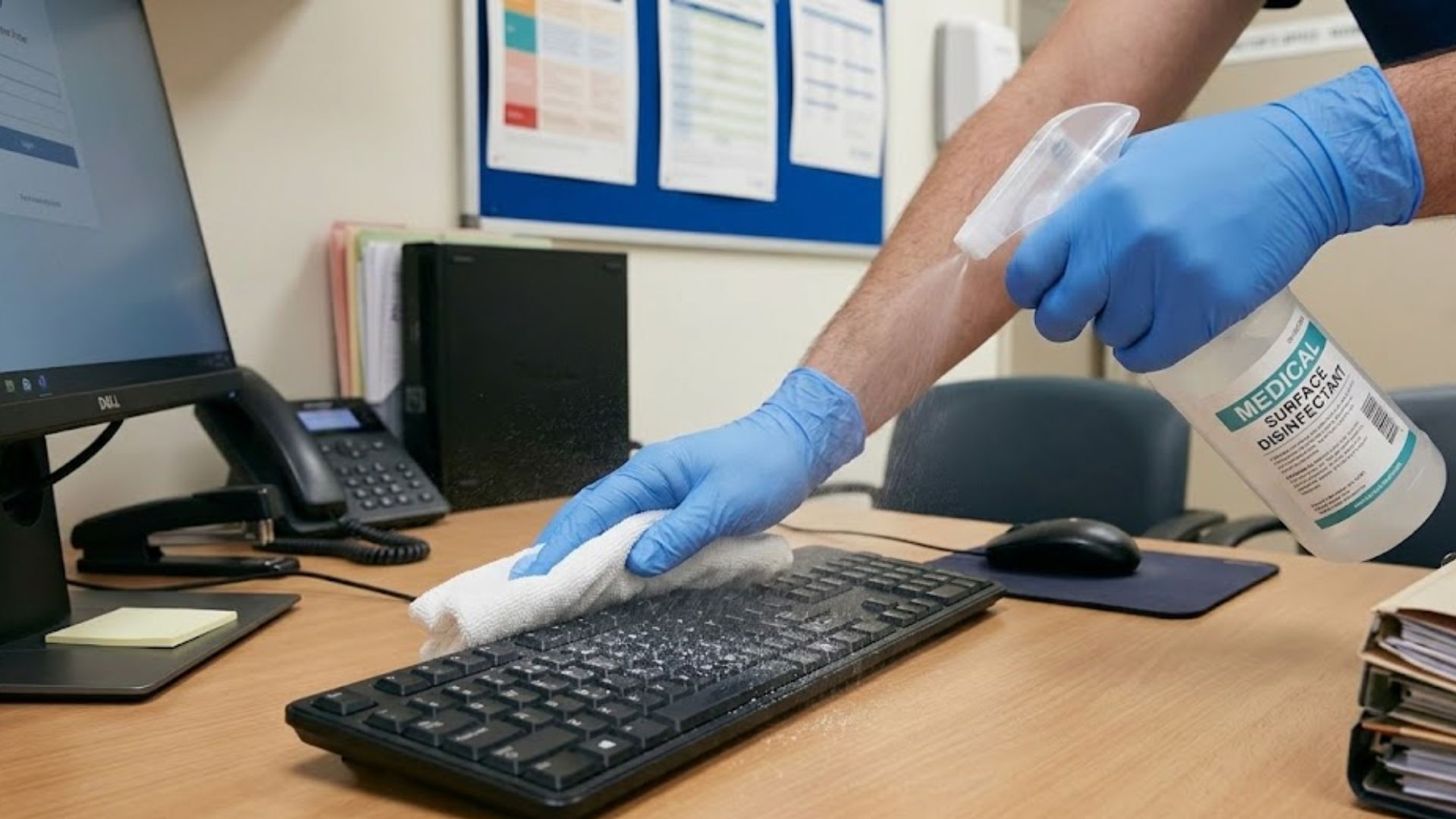
The Four Accumulation Zones Routine Cleaning Cannot Reach
Every healthcare facility has four categories of surface that routine daily cleaning does not reach — not because the cleaning programme is poorly designed, but because these surfaces require access that routine cleaning protocols do not include: moving equipment, working at height, disassembling fittings, or accessing areas that are physically obstructed during a standard clean. These zones accumulate contamination continuously between deep cleans. A periodic medical deep clean is the only way to address them.
Four Situations That Require a Medical Deep Clean
Medical deep cleaning is not triggered solely by how dirty a facility looks. The four accumulation zones described above build contamination at a rate that is largely invisible until it reaches a level where it affects air quality, creates a HAI risk, or generates a compliance gap. A facility that looks clean to a daily observer can have years of undisturbed accumulation in its ceiling vents, behind its fixed equipment, and in its floor junctions. The trigger for a medical deep clean is a combination of elapsed time since the last thorough deep clean, a specific clinical event, or an upcoming accreditation assessment where the evidence of a recent deep clean strengthens the infection prevention file.
For facilities that have never had a formal medical deep clean — or where the last thorough deep clean was more than 12–18 months ago — the first engagement typically reveals accumulation in the four zones that cannot be addressed in a single session. We scope the first deep clean as a reset clean, establish the facility's true baseline, and recommend a maintenance deep clean interval based on what we find. The maintenance interval is typically shorter than the initial reset interval because the reset removes the accumulated backlog and the maintenance clean only addresses what has accumulated since.
Written scope is provided before any deep clean engagement — specifying the areas included, the method and chemistry for each zone, the estimated duration, and the expected disruption to clinical operations. See our services overview or request a quote.
When a Medical Deep Clean Is Required
How We Deliver a Medical Deep Clean
A medical deep clean is a planned, scoped engagement — not an unstructured intensive clean. Before any work begins, we conduct a pre-clean assessment of the facility: walking all clinical and non-clinical areas, mapping the four accumulation zones, identifying access requirements (equipment that must be moved, areas that require step or platform access), confirming which areas can be accessed during operational hours and which require after-hours scheduling, and documenting any surfaces or materials that require specific chemical compatibility checks.
The written scope that follows the assessment specifies: each area included, the surfaces to be addressed in each area, the method and chemistry for each surface type, the estimated duration, the staff required, any access arrangements needed, and the disruption to clinical operations. This scope is agreed with your facility manager before any work commences. We do not start a deep clean without a signed scope — it protects both parties and ensures the clinical team is prepared for the operational impact.
Chemistry selection for a medical deep clean uses the same TGA-registered products as our infection control and terminal cleaning services — but the application scope is wider. Surfaces in the four accumulation zones are treated with the same two-step clean-then-disinfect protocol used in high-risk clinical zones. There is no reduced chemistry standard for deep clean surfaces on the basis that they are "less clinical" — contamination in ceiling vents and behind equipment is the same contamination regardless of how it got there.
A written completion report is provided after every medical deep clean — documenting each area cleaned, the products used (with TGA registration numbers), the date and duration of the work, and the staff who performed it. This document is your evidence file record for NSQHS, ACQSC or RACGP accreditation purposes and is issued as a signed PDF.
Medical Deep Clean Sequence
All areas walked and mapped. Four accumulation zones identified per room. Access requirements confirmed — equipment to be moved, step access areas, after-hours scheduling. Written scope issued to facility manager for approval before work commences.
Ceiling vent covers removed, wiped and disinfected — both the cover face and the accessible duct surround. Top surfaces of all wall-mounted cabinets, monitors and shelves. Door frame tops and architraves. Light fitting housings and pendant arm surfaces. HEPA vacuum used before wet wiping to capture loose particulate without dispersing it.
Fixed equipment pulled forward or accessed from the rear as per the scope. All surfaces behind and beneath cleaned and disinfected. Equipment repositioned and surfaces confirmed clean before reinstatement. Coordination with facility maintenance team for any items requiring disconnection.
All standard clinical surfaces cleaned and disinfected using the two-step protocol — same standard as infection control cleaning. Top-down, far-to-near sequence. TGA-registered chemistry, dwell times observed. Single-use colour-coded cloths by zone.
Skirting boards fully wiped — top ledge and face. Floor-to-skirting junction detail cleaned with crevice tool. Drain surrounds and drain covers removed and cleaned. Door threshold channels and expansion joints detailed. Kick-plates and underside of cabinetry toe spaces.
Window tracks disassembled and cleaned. Blind slats, cords and mechanisms. Curtain tracks and runners. Floor cleaned and disinfected last — full extraction or mop-and-dry with TGA product. Written completion report issued: areas, products, TGA numbers, staff, date and duration. Signed PDF provided to facility manager.
Standards That Require Periodic Deep Cleaning in Australian Healthcare
Medical deep cleaning sits within the broader infection prevention and environmental cleaning governance framework. The standards below each contain requirements or expectations that a periodic deep clean programme satisfies.
Medical Deep Cleaning Cost — Melbourne Healthcare Facilities
Medical deep cleaning is priced based on total facility area, the number and complexity of the four accumulation zones, whether equipment access or height access is required, and whether after-hours scheduling is necessary. A small GP practice requiring a straightforward biannual deep clean is a substantially different engagement from a large aged care facility with a complex built environment requiring a full pre-accreditation reset clean.
All deep clean engagements begin with a free site assessment, after which a written fixed-price scope is provided within 24 hours. The scope specifies the areas included, the method and chemistry, the estimated duration, and the operational disruption so your facility manager can plan clinical scheduling around the work.
Facilities setting up a periodic deep clean programme can arrange a service agreement with a fixed per-visit price, a confirmed schedule, and a monthly or per-visit billing cycle. This removes the need to requote with each deep clean event and ensures consistent team familiarity with the facility. See our pricing page or request a quote.
Deep Clean Schedule by Facility Type
| Facility Type | Recommended Interval | Guide Price |
|---|---|---|
| Solo GP practice — simple fit-out | Every 6 months | $480 – $780 |
| Group medical practice | Every 4–6 months | $780 – $1,400 |
| Specialist clinic or day hospital | Every 3–6 months | $1,200 – $2,400+ |
| Aged care facility — per wing | Every 3–4 months | $1,400 – $3,200+ |
| Post-renovation reset clean | Once-off before reopening | $960 – $2,800+ |
| Pre-accreditation deep clean | Within 3–6 months pre-assessment | $780 – $2,400+ |
← Swipe to see full table on mobile | All prices excl. GST, based on standard access. Complex built environments, height access or after-hours scheduling will affect pricing.
Medical Deep Cleaning Melbourne — Frequently Asked Questions
Common questions from Melbourne healthcare facility managers about periodic and emergency medical deep cleaning.
Routine healthcare cleaning addresses all surfaces that are accessible during a standard daily clean — patient-contact surfaces, bathrooms, floors and visible clinical areas. It cannot reach the four accumulation zones: above-sightline surfaces and ceiling vents, behind and beneath fixed equipment, skirting board junctions and drains, and window tracks and soft furnishings. A medical deep clean specifically targets these zones using access equipment, disassembly of fittings, and detail tools that are not part of a routine cleaning protocol. It is performed periodically — typically every 3–6 months depending on the facility — to address the accumulation that occurs between routine cleaning events.
The recommended frequency depends on the facility type, patient volume, built environment complexity and HVAC airflow characteristics. A general guide: solo GP practices every 6 months, group medical practices every 4–6 months, specialist clinics and aged care facilities every 3–4 months. Post-renovation and pre-accreditation deep cleans are once-off events triggered by specific circumstances. Facilities that have not had a formal medical deep clean for more than 12–18 months typically require an initial reset clean before a maintenance interval can be established. We recommend an interval based on what we observe during the initial site assessment — not a generic schedule applied regardless of the facility's actual condition.
Not necessarily in full — the answer depends on which zones are being cleaned and whether patients are present. Zone 1 work (above sightline and ceiling) that involves removing vent covers and using step access is best performed outside clinical hours to avoid disturbing fine particulate over patients. Zone 2 work (behind and beneath equipment) that requires moving clinical equipment requires the area to be free of patients. Zone 3 and Zone 4 surface work can often be staged during lower-occupancy periods. Our written scope specifies which areas require after-hours access and which can be staged during operational hours — the facility manager can then plan clinical scheduling accordingly. We offer early-morning, evening and weekend scheduling for all after-hours work.
Yes. Every medical deep clean engagement generates a written completion report — issued as a signed PDF — specifying: each area cleaned, the surfaces addressed in each zone, the products used with TGA registration numbers, the date and duration of the work, and the staff who performed it. This document is your evidence file record for NSQHS Standard 3, ACQSC Aged Care Quality Standards and RACGP practice accreditation. ACQSC and RACGP assessors regularly request evidence of periodic deep cleaning as part of the infection prevention documentation review. We can also provide pre-accreditation scheduling that ensures your most recent deep clean completion report falls within the evidence window your assessor is reviewing.
Small facility up to 200m²: $480–$980 per deep clean. Medium facility 200–600m²: $980–$2,400. Large facility 600m² and above: $2,400–$5,800+. All prices exclude GST. Complex built environments, height access, equipment disassembly or after-hours scheduling will affect final pricing. Every engagement begins with a free site assessment and a written fixed-price scope within 24 hours. See our pricing page or request a quote online.
Book a Medical Deep Clean for Your Melbourne Healthcare Facility
Top-to-bottom clean of all four accumulation zones. TGA-registered chemistry, NSQHS Standard 3 and AS/NZS 4815 aligned. Written completion report for your accreditation file. Periodic programme scheduling and pre-accreditation deep cleans available. Call 0484 042 336 or request online.